

Are animal eyes the same as human eyes?
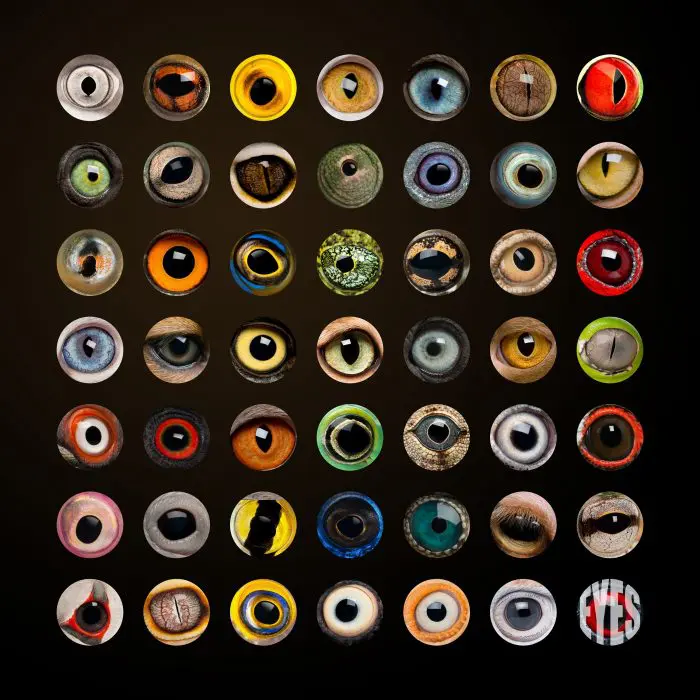
In the animal kingdom, vision is dependent on environment and evolution. As a result, an animal’s vision is highly adapted to their surroundings whether on land, in the air, or in the sea. Some animals supplement their poor vision with other senses becoming more developed. Therefore, eyes can vary greatly from species to species.
Here are some interesting differences between human eyes and animal eyes. First of all, not all animals have two eyes:
- A worm has no eyes at all.
- Snakes have two sets of eyes – one set used to see, and the other to detect heat and movement.
- The four-eyed fish can see both above and below water at the same time.
- Bees have 5 eyes.
- Scorpions can have as many as 12 eyes and the box jellyfish has 24.
- A scallop has an average of 100 eyes around the edge of its shell to detect predators.
There are also very distinct anatomical differences between human eyes and animal eyes:
- An ostrich’s eye is bigger than its brain.
- Goats have rectangular pupils to give them a wide field of vision.
- Snakes have no eyelids, just a thin membrane covering the eye.
- Birds, cats, dogs and camels have three eyelids.
- Camel’s eyelashes can measure up to 5 inches long to protect its eyes from blowing sand and debris in the desert.
- A dragonfly has 30,000 lenses in its eyes, assisting them with motion detection and making them very difficult for predators to kill.
- Dog eyes have more rods in their retina than humans, which means they can see much better at night.
- Geckos have more cones in their retina than humans and can see colors 350 times better, even in dim lighting.
- Chameleons can move their two eyes in different directions at the same time, allowing them to look at two things at once.
- Owls cannot move their eyeballs – which has led to the distinctive way they turn their heads almost all the way around.
Due to this diversity and complexity of eye differences between species, a veterinary ophthalmologist must go through significant training before becoming licensed and certified to treat eye diseases in animals. These doctors treat glaucoma, cataracts, corneal disease and retinal diseases just like traditional ophthalmologists.