

Why Does My Eyelid Twitch?
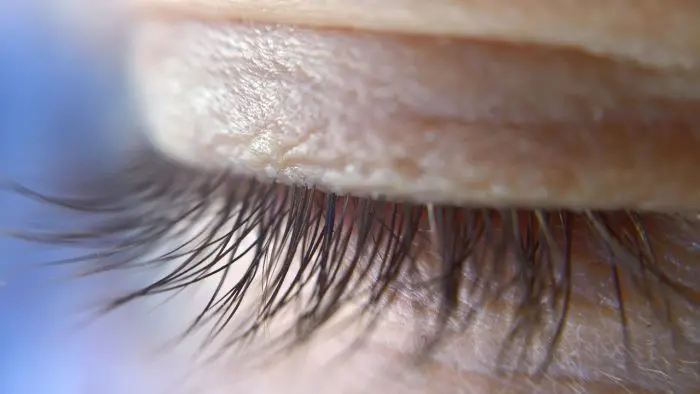
An eyelid twitch is a repetitive spasm or slight movement of the eyelid muscles. The medical term for this is called “myokymia.” These movements are involuntary, meaning that they are out of one’s control. The eyelid twitch usually occurs in the upper lid, but it can occur in either the upper or lower lids. The twitch can come on suddenly and can last for a minute, hours, days or even longer. Most twitches are slight enough that they can’t be seen by someone else simply looking at the person’s face. For most people, these spasms are very mild and feel like a gentle tug on the eyelid. However, no matter how slight the movement, twitching of the eyelid can be quite annoying and distracting.
Eyelid spasms may occur without any identifiable cause and usually resolve on their own. A minor eyelid twitch is often associated with lack of sleep, stress, fatigue and use of alcohol, tobacco or caffeine. Eyelid twitching can also result from irritation of the surface of the front part of the eye called the cornea or the membranes that line your eyelids called the conjunctiva.
If the spasms become chronic, the person may have what is known as “benign essential blepharospasm.” This is the name for chronic and uncontrollable winking or blinking. This condition typically affects both eyes but the exact cause of the condition is unknown. In advanced stages, the eyelids may shut so tightly that the person is unable to see. Benign essential blepharospasm is more common in women than in men, usually develops in middle to late adulthood and affects approximately 50,000 Americans. Researchers believe it results from a mix of environmental and genetic factors. Although the condition is usually random, it sometimes runs in families.
Another condition involving lid twitching is called hemifacial spasm. This involves both the muscles around the mouth and the eyelid. Hemifacial spasm usually affects only one side of the face and is most often caused by an artery pressing on a facial nerve.
Very rarely, eyelid spasms are a symptom of a more serious brain or nerve disorder. When eyelid twitches are a result of these more serious conditions, they’re almost always accompanied by other symptoms. Brain and nerve disorders that may cause eyelid twitches include:
- Dystonia, which causes unexpected muscle spasms and the affected area’s body part to twist or contort
- Multiple sclerosis (MS), which is a disease of the central nervous system that causes cognitive and movement problems, as well as fatigue
- Parkinson’s disease, which can cause trembling limbs, muscle stiffness, balance problems, and difficulty speaking
- Tourette syndrome, which is characterized by involuntary movement and verbal tics
In most cases, a minor twitch will go away on its own. Make sure you get enough rest and cut back on alcohol, tobacco, and caffeine. If dry eyes or irritated eyes are the cause, try over-the-counter artificial tears. That can often ease a minor twitch. Thus far, doctors haven’t found a cure for benign essential blepharospasm, but the most common treatment is botulinum toxin (Botox, Dysport, Xeomin). A doctor will inject small amounts into your eye muscles to ease the spasms. The effect lasts a few months before it slowly wears off. You’ll need repeat treatments. It is also often used to treat hemifacial spasm. Oral medicine like Tegretol or surgery to decompress the nerve from an artery are used in other cases.
Chronic eyelid spasms may be a symptom of a more serious brain or nervous system disorder. You may need to see your doctor if you’re having chronic eyelid spasms along with any of the following symptoms:
- Your upper eyelid is drooping.
- Your eyelid completely closes each time your eyelids twitch.
- The twitching continues for several weeks.
- The twitching begins affecting other parts of your face.
- Your eye is red, swollen, or has an unusual discharge.